
Understanding the correct knife sharpening angle is paramount for achieving optimal performance and longevity of your blades; consistency is key.
The angle dictates the edge geometry, impacting sharpness versus durability, and is more crucial than the grit selection itself.
Why Angle Matters More Than Grit
While grit size refines the edge, the sharpening angle fundamentally defines the blade’s geometry and, consequently, its performance characteristics. A precise angle establishes the edge’s thinness and robustness. Choosing the correct angle is not guesswork; it’s a balance between steel hardness, intended cutting tasks, and desired edge retention.
A steeper angle creates a more durable, but less acutely sharp, edge, ideal for tougher tasks. Conversely, a shallower angle yields a sharper, but more delicate, edge suited for precision work. Grit merely polishes the angle you’ve established; a poor angle, no matter how fine the grit, will result in a suboptimal edge.
The Importance of Consistency
Maintaining a consistent sharpening angle throughout the entire process is absolutely critical for achieving a uniform and effective edge. Variations in angle create an uneven bevel, resulting in a weak and unpredictable cutting performance. Even the finest grit cannot compensate for inconsistent angle work.
Consistency ensures that the entire edge possesses the same level of sharpness and durability. Utilizing angle guides, or developing a reliable freehand technique, are essential for repeatable results. A consistent angle guarantees a clean, efficient cut and maximizes the lifespan of your sharpened blade.
Understanding Knife Blade Geometry
Knife blade geometry, specifically the bevel angle, profoundly influences sharpness and edge retention; understanding this relationship is vital for effective sharpening.
The Relationship Between Angle and Sharpness
A shallower angle creates a thinner, more acute edge, resulting in superior sharpness. This is because a smaller angle concentrates force onto a smaller surface area, allowing for easier penetration during cutting. However, this increased sharpness comes at a cost: reduced durability.
Conversely, a steeper angle produces a more robust, but less sharp, edge. While it won’t slice through materials as effortlessly, it’s more resistant to chipping and rolling, making it suitable for tougher tasks. The ideal angle represents a balance between these two factors, tailored to the knife’s intended use and the steel’s properties.
Angle and Edge Longevity
Steeper sharpening angles create thicker edges, enhancing durability and resistance to chipping or rolling, especially crucial for knives used on harder materials or for demanding tasks like chopping. However, this robustness sacrifices some sharpness, requiring more force for clean cuts.
Shallower angles yield incredibly sharp edges, but they are more susceptible to damage. These edges excel at slicing but are less forgiving when encountering resistance. Selecting the appropriate angle involves considering the steel type; harder steels can maintain a sharper angle longer, while softer steels benefit from steeper angles.
Defining the Bevel Angle
The bevel angle represents the angle formed between the knife’s edge and the body of the blade, fundamentally influencing its cutting performance. It’s not the total included angle of the edge, but rather half of that measurement – the angle you maintain during sharpening.
Accurately defining this angle is vital for consistent sharpening. Engineers and experienced sharpeners utilize tools to measure existing bevels, or estimate visually. Understanding that a 20-degree angle isn’t simply “20 degrees” but a specific geometric relationship is key to achieving a refined, functional edge.
Common Knife Types and Their Ideal Angles
Different knife designs necessitate varying sharpening angles to optimize performance; chefs knives typically use 20 degrees, while fillet knives benefit from 15 degrees.
Chef’s Knives: The Standard 20-Degree Angle
The 20-degree angle is widely considered the standard for chef’s knives, striking a balance between sharpness and edge retention. This angle allows for clean, precise cuts through a variety of ingredients, from delicate vegetables to tougher meats.
A 20-degree bevel provides sufficient steel behind the edge to resist rolling and chipping during demanding kitchen tasks. While some chefs prefer slightly steeper angles (up to 25 degrees) for increased durability, the 20-degree mark remains a versatile choice.
Maintaining this angle consistently during sharpening is crucial for optimal performance, ensuring the knife excels in its primary role as a kitchen workhorse.
Paring and Utility Knives: 15-20 Degree Angle
Paring and utility knives benefit from a slightly shallower 15-20 degree angle, prioritizing sharpness for intricate tasks. These knives are designed for detailed work like peeling, trimming, and scoring, where a keen edge is paramount.
The reduced angle creates a thinner, more delicate edge, enhancing precision and control. However, this comes at the cost of some durability; these knives may require more frequent honing and sharpening.
A 15-degree angle is ideal for softer fruits and vegetables, while 20 degrees offers a bit more robustness for general utility purposes.
Boning and Fillet Knives: 15-Degree Angle for Flexibility
Boning and fillet knives demand a specialized 15-degree angle to maximize their inherent flexibility. This acute angle creates an exceptionally sharp, thin edge, crucial for navigating around bones, skin, and delicate fish fillets with minimal resistance.
The shallow angle allows the knife to glide effortlessly, reducing tearing and waste. However, this edge is more prone to chipping and rolling, necessitating careful handling and frequent honing.
Maintaining this precise angle is vital for preserving the knife’s performance and ensuring clean, precise cuts.
Pocket Knives and EDC Blades: 20-25 Degree Angle
Everyday carry (EDC) knives and pocket knives typically benefit from a 20-25 degree sharpening angle, striking a balance between sharpness and durability. This range provides a robust edge capable of handling a wider variety of tasks, from opening packages to light utility work.
The slightly steeper angle enhances edge retention, making it less susceptible to damage from abrasive materials or accidental impacts encountered during daily use.
Consistent angle maintenance is key for reliable performance, ensuring the blade remains effective for extended periods.
Specialty Knives (Cleavers, Machetes): 30-40 Degree Angle
Cleavers and machetes, designed for heavy-duty chopping and robust tasks, require a significantly steeper sharpening angle of 30-40 degrees. This robust angle prioritizes edge durability over extreme sharpness, preventing rolling or chipping when impacting dense materials like bone or thick vegetation.
While not as acutely sharp as finer blades, the increased angle provides the necessary strength to withstand forceful blows and maintain functionality through prolonged use.
Regular sharpening, even at this higher angle, is crucial for safe and effective operation.
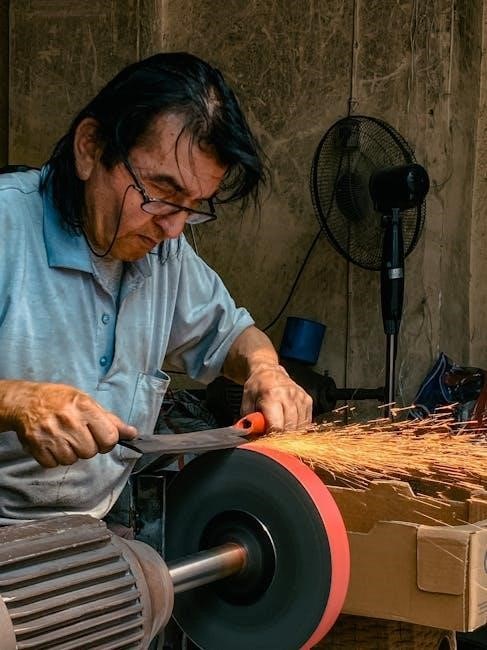
Using a Knife Sharpening Angle Guide
Angle guides ensure consistent sharpening, vital for optimal performance. Options include magnetic, clip-on, and freehand references, aiding in achieving the desired bevel.
Types of Angle Guides Available
Numerous knife sharpening angle guides exist, catering to diverse preferences and skill levels. Magnetic angle guides attach directly to the blade, providing a secure and consistent angle throughout the sharpening process, often favored by beginners for their simplicity.
Clip-on angle guides, conversely, affix to the spine of the knife, offering a different point of stability and control. These are generally adjustable, accommodating various blade geometries. For those preferring a freehand approach, angle reference tools – like small protractors or visual guides – assist in maintaining the correct angle without physical attachment.
Ultimately, the best guide depends on individual comfort and the specific sharpening system employed, but all aim to deliver repeatable, precise results.
Magnetic Angle Guides
Magnetic angle guides represent a popular entry point for those seeking consistent sharpening angles. These small devices utilize a strong magnet to securely attach to the knife blade, establishing a fixed angle relative to the sharpening stone.
They are particularly beneficial for beginners, as they eliminate much of the guesswork involved in maintaining a consistent angle freehand. Typically adjustable, these guides accommodate a range of common knife angles, from 15 to 25 degrees.
However, some users find they can interfere with the sharpening stroke or may not adhere perfectly to curved blades, requiring careful positioning and technique.
Clip-On Angle Guides
Clip-on angle guides offer another method for achieving consistent sharpening angles, differing from magnetic guides in their attachment mechanism. These guides typically clamp onto the spine of the knife blade, providing a stable reference point during the sharpening process.
They often feature adjustable settings to accommodate various blade geometries and desired angles, commonly ranging from 15 to 30 degrees. Clip-on guides can be more secure than magnetic options on certain blade shapes, particularly those with complex curves.
However, ensure a snug fit to prevent movement during sharpening, as slippage can compromise accuracy.
Freehand Sharpening with Angle Reference
Freehand sharpening, while demanding, offers ultimate control, but requires practice and a reliable angle reference. Instead of a physical guide, skilled sharpeners develop muscle memory and visual cues to maintain consistency.
Utilizing a visual reference – like a printed angle template or a marked surface – can aid beginners. Focus on establishing a consistent angle throughout each stroke, observing the bevel formation.
Regularly checking the angle against your reference point is crucial. Mastering freehand sharpening takes time, but yields exceptional results and adaptability.
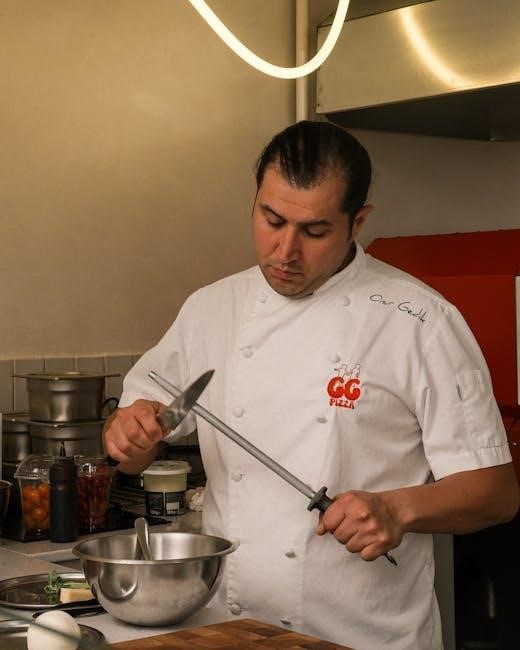
Determining the Correct Angle for Your Knife
Accurately identifying your knife’s existing bevel angle is vital for consistent sharpening; use a protractor, angle finder, or careful visual estimation.
Measuring Existing Bevel Angle
Precisely determining the current bevel angle of your knife is the first step towards successful sharpening. This ensures you maintain the original geometry or intentionally modify it. Several methods exist for achieving this measurement. A dedicated angle finder or protractor designed for knife edges provides the most accurate reading, directly displaying the angle in degrees.
Alternatively, you can utilize printable angle templates found online, carefully aligning the blade against the printed angle guides. For those without specialized tools, a visual estimation technique can be employed, comparing the blade’s angle to known references. Remember, consistency in measurement is crucial for repeatable results.
Using a Protractor or Angle Finder
Employing a protractor or dedicated angle finder offers a precise method for determining a knife’s bevel angle. Digital angle finders are particularly user-friendly, providing a clear digital readout of the angle in degrees. Traditional protractors require careful alignment, ensuring the base is flat against the blade and the arm accurately reflects the bevel’s slope.
When using either tool, consistently position the knife to minimize parallax error. Take multiple readings from different points along the blade to account for any variations. Accurate measurement is fundamental for replicating the existing angle or establishing a new, desired angle during sharpening.
Estimating Angle Visually
While less precise, visually estimating a knife’s bevel angle is a valuable skill, especially when tools aren’t readily available. Begin by imagining a line bisecting the blade’s edge, forming the central axis. Then, assess the angle formed between this line and the flat surface of the blade.
Common angles, like 20 degrees, can be mentally referenced; A 20-degree angle is roughly equivalent to holding the blade at a slight tilt. Practice comparing known angles with your estimations to improve accuracy. This method requires experience, but it’s a useful technique for quick assessments.
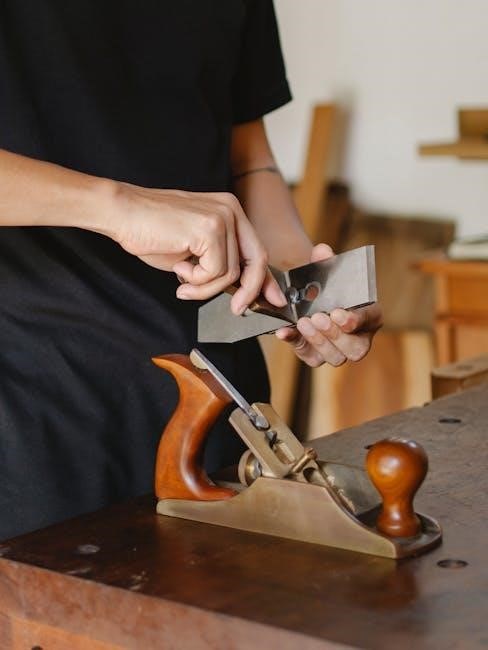
Sharpening Systems and Angle Control
Modern sharpening systems, like Wicked Edge and Lansky, offer precise angle adjustments and locking mechanisms, ensuring consistent bevels throughout the sharpening process.
Wicked Edge Systems and Angle Adjustment
Wicked Edge sharpening systems are renowned for their precision and ability to maintain consistent angles. These systems utilize a unique approach, allowing users to set the bevel angle not just by degrees, but also by referencing edge height and the ball end distance from the knife’s centerline.
This method, originating from an engineer’s spreadsheet analysis, provides an alternative and highly accurate way to dial in the desired angle. The system’s design ensures repeatable results, making it a favorite among knife enthusiasts seeking professional-level sharpening at home. Adjustments are easily made, catering to various blade geometries and steel types.
Lansky Sharpening Systems and Angle Lock
Lansky sharpening systems offer a more traditional, yet highly effective, approach to angle control. These systems typically feature a clamp that securely holds the knife blade, while a series of guide posts allow for precise angle selection. A key feature is the “angle lock” mechanism, which firmly secures the sharpening stone at the chosen angle throughout the sharpening process.
This ensures consistent contact between the stone and the blade, leading to a uniform bevel. Lansky systems are popular for their portability and affordability, making them a great choice for both beginners and experienced sharpeners seeking reliable angle control.
Guided Sharpening Stones and Angle Holders
Guided sharpening stones represent a simpler, yet effective, method for maintaining consistent angles. These often involve using a stone with an integrated angle guide or employing separate angle holders that attach to standard sharpening stones. These holders physically restrict the angle at which you can draw the blade across the stone.
This is particularly helpful for those still developing their freehand sharpening skills. They provide a stable platform and visual cues, promoting accuracy and repeatability. They are a cost-effective solution for achieving consistent results, especially for common knife angles.
Adjusting for Different Steel Types
Harder steels benefit from lower angles for enhanced sharpness, while softer steels require higher angles to maintain edge retention and durability.
Harder Steels and Lower Angles
When dealing with harder steel types, such as those found in many high-end Japanese knives, a lower sharpening angle is generally recommended. These steels possess excellent edge retention capabilities, meaning they hold a sharp edge for a longer duration. Consequently, a more acute angle – typically in the range of 15 to 18 degrees – can be employed to achieve a supremely sharp cutting edge.
However, it’s crucial to acknowledge that a lower angle also results in a more delicate edge, potentially making it more susceptible to chipping or rolling under heavy use. Therefore, careful consideration of the knife’s intended purpose is essential when selecting the optimal angle for harder steels.
Softer Steels and Higher Angles
Conversely, softer steel types, commonly found in more affordable knives, benefit from a higher sharpening angle. These steels lack the inherent edge retention of their harder counterparts and require a more robust edge to withstand wear and tear. A sharpening angle of 20 to 25 degrees is generally recommended for softer steels.
This wider angle creates a stronger, more durable edge that is less prone to chipping or rolling, even under demanding use. While a higher angle may not achieve the same razor-sharpness as a lower angle, it provides a practical balance between sharpness and longevity for softer steel blades.

Troubleshooting Sharpening Angle Issues
Identifying and correcting incorrect sharpening angles is vital for optimal knife performance; look for uneven sharpening or a weak edge as indicators.
Recognizing Incorrect Angle Sharpening
Detecting an incorrect sharpening angle requires careful observation of the blade’s edge. A primary sign is an inconsistent bevel – where the sharpened area doesn’t run uniformly along the blade’s length. You might notice a steeper angle towards the tip and a shallower one closer to the handle, or vice versa.
Another telltale sign is a weak or fragile edge that doesn’t hold up during use. This often results from sharpening at too shallow an angle, creating a very fine, but easily damaged, edge. Conversely, a too-steep angle produces a robust but dull edge, struggling with finer cutting tasks.
Visually inspect the edge for rounded corners or a lack of a defined apex, indicating improper angle maintenance.
Correcting a Too-Steep Angle
Addressing a too-steep sharpening angle demands patience and a deliberate approach. The goal is to gradually reduce the angle, bringing it closer to the knife’s ideal specification. Begin by slightly increasing the height of your sharpening guide, or adjusting your hand position if freehand sharpening.
Focus on removing metal from the higher portion of the bevel, effectively lowering the angle. Employ lighter pressure during each stroke to avoid overheating the steel and maintain control. Regularly check your progress, using visual cues or an angle finder to monitor the change.
This is a slow process; avoid aggressive sharpening to prevent further distortion of the bevel.
Correcting a Too-Shallow Angle
Rectifying a too-shallow sharpening angle requires a focused effort to build up the edge and increase the bevel’s angle. Lower the sharpening guide slightly, or adjust your hand position downwards if sharpening freehand, to introduce more angle.
Concentrate on removing metal from the shoulder of the blade, strengthening the edge and increasing its robustness. Apply moderate, consistent pressure during each pass, ensuring even material removal. Frequently assess your progress, utilizing visual inspection or an angle measuring tool.
Avoid excessive force, as this can lead to an uneven or rounded edge.

Advanced Angle Concepts
Exploring compound bevels and micro-bevels enhances sharpness and edge retention; edge height and ball end distance refine angle precision for optimal results.
Compound Bevels and Their Benefits
Compound bevels represent a sophisticated sharpening technique, employing two distinct angles along the blade’s edge. A primary, steeper bevel provides robust edge support and durability, crucial for resisting chipping during demanding tasks. Above this, a secondary, shallower bevel creates an exceptionally acute cutting edge, maximizing sharpness for effortless slicing;
This combination offers a compelling balance: the strength of a higher angle paired with the keenness of a lower one. They enhance edge retention, reducing the frequency of sharpening, and improve overall cutting performance. Skilled sharpeners utilize this method to unlock a knife’s full potential, achieving both resilience and remarkable sharpness.
Micro-Bevels for Enhanced Sharpness
Micro-bevels are exceptionally small, secondary bevels created at the very edge of the knife, representing a refinement of the sharpening process. Applied after establishing the primary bevel, they involve a slightly steeper angle – often just a degree or two higher. This subtle adjustment dramatically enhances sharpness by creating an incredibly thin and refined cutting edge.
While seemingly minor, micro-bevels significantly improve slicing ability and reduce resistance. They also bolster edge durability, offering a degree of protection against rolling or chipping. This technique is favored by professionals seeking peak performance and is easily achievable with precision sharpening systems.
The Impact of Edge Height and Ball End Distance
Edge height and ball end distance are critical parameters when utilizing sharpening systems like the Wicked Edge, allowing precise bevel angle control. Edge height, the distance from the knife’s spine to the cutting edge, directly correlates to the sharpening angle. Similarly, ball end distance – measured from the knife’s centerline – influences angle accuracy.
These measurements enable users to replicate angles consistently, vital for maintaining a uniform bevel. Charts and spreadsheets, often created by experienced users, translate desired angles into specific edge height and ball end distance settings. Mastering these concepts unlocks a new level of sharpening precision and repeatability.

Maintaining Your Sharpened Edge
Regular honing preserves the established angle, delaying the need for extensive re-sharpening. Avoid impacts and abrasive materials to protect the carefully crafted bevel.
Regular Honing to Preserve the Angle
Honing isn’t sharpening, but a vital maintenance step. It realigns the microscopic teeth of the blade’s edge, which naturally bend during use, restoring its cutting ability.
Using a honing steel frequently – even before each use – maintains the existing angle and prevents significant dulling. This minimizes the amount of material removed during future sharpening sessions.
Consistent honing extends the life of your knife’s edge and reduces the need for aggressive sharpening, preserving the carefully established bevel angle. A properly honed knife feels remarkably sharper and performs with greater precision.
Avoiding Damage to the Bevel
Protecting the bevel is crucial for long-term sharpness. Avoid using your knives on surfaces that will roll or chip the edge, like glass or ceramic cutting boards. These materials offer excessive resistance.
Never apply sideways pressure during cutting, as this can cause the bevel to collapse or become uneven. Store knives properly, ideally in a block, on a magnetic strip, or with blade guards, to prevent accidental impacts.
Careless handling and improper cleaning can also damage the bevel. Consistent maintenance and mindful use are key to preserving the integrity of your knife’s edge.

Resources for Further Learning
Explore online sharpening communities, forums, and video tutorials for in-depth knowledge. Recommended books offer comprehensive guidance on knife sharpening techniques.
Online Sharpening Communities and Forums
Engaging with online sharpening communities and forums provides a valuable platform for learning and sharing knowledge. These spaces are populated by experienced enthusiasts and professionals eager to assist newcomers and discuss advanced techniques. Platforms like BladeForums and Reddit’s r/sharpening offer extensive threads dedicated to angle selection, sharpening systems, and troubleshooting common issues.
Members frequently share detailed advice, visual aids, and personal experiences, fostering a collaborative learning environment. You can find answers to specific questions about your knife type, steel, or preferred sharpening method, and gain insights into optimizing your sharpening angle for peak performance.
Sharpening Tutorials and Videos
Visual learning is incredibly effective for mastering knife sharpening, and numerous tutorials and videos are readily available online. YouTube channels like Murray Carter’s and JKI Knives offer comprehensive guides covering everything from basic angle concepts to advanced sharpening techniques. These resources demonstrate proper form, tool usage, and angle maintenance in a clear, step-by-step manner.
Many tutorials focus specifically on using angle guides, showcasing how to achieve consistent results with various sharpening systems. Watching experienced sharpeners can significantly accelerate your learning curve and help you avoid common pitfalls, ultimately improving your ability to maintain a precise and effective edge angle.
Recommended Sharpening Books
For a deeper understanding of knife sharpening principles, several books offer detailed explanations and practical guidance. “The Complete Guide to Sharpening” by Harold “Hal” Silverman is a classic resource, covering various sharpening methods and steel types. Another excellent choice is “Knife Sharpening Made Easy” by Steve Bottorff, which provides clear instructions and illustrations for achieving a razor-sharp edge.
These books delve into the importance of angle consistency, bevel formation, and troubleshooting common sharpening issues. They often include information on selecting the appropriate sharpening tools and maintaining your equipment, offering a comprehensive foundation for mastering the art of knife sharpening.